5 Overstated Objections Keeping U.S. Attorneys From Offshore Trusts
20 October 2026
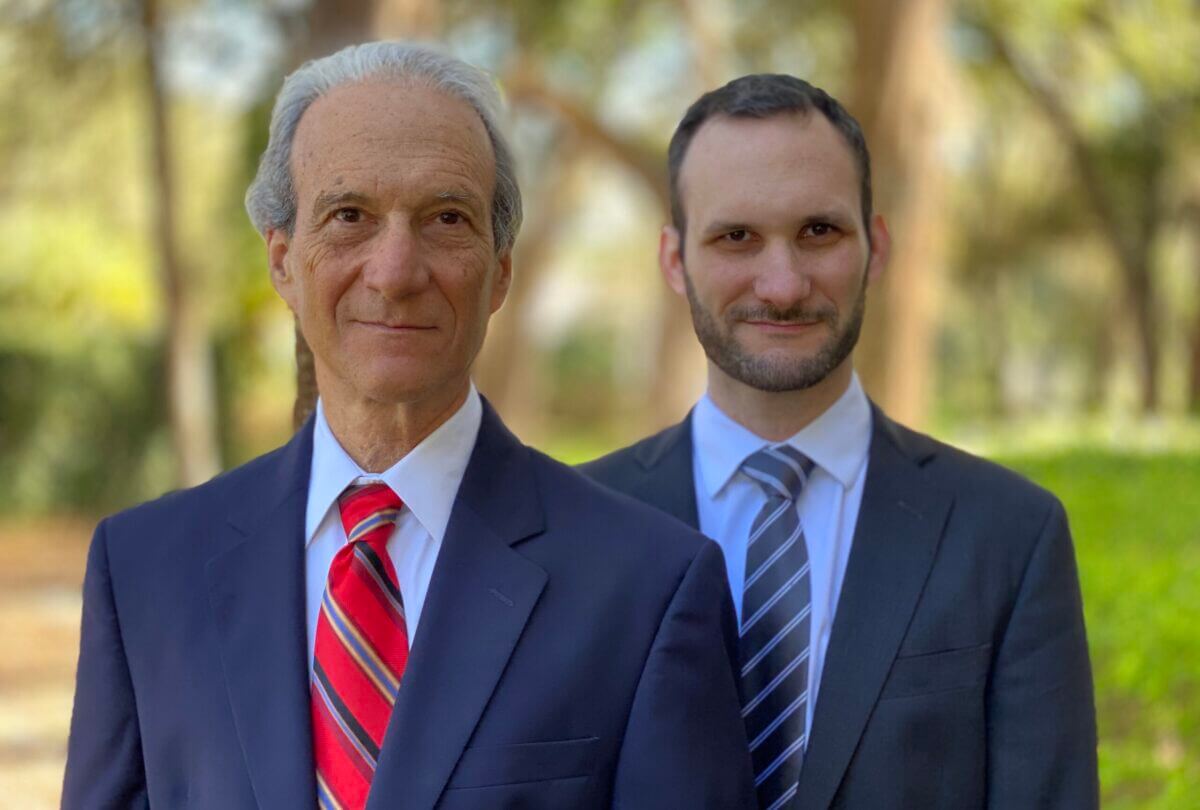
A Guest Article By Gideon Alper, Alper Law, PLLC
Gideon Alper leads the nationally recognized offshore asset protection practice at Alper Law, a Florida firm. Mr. Alper is considered an expert in the design of Cook Islands trusts and related structures for U.S. clients. He previously served as an attorney in the IRS Office of Chief Counsel’s Large Business and International Division.
______________________________________
Many U.S. attorneys draft trusts routinely: revocable living trusts, irrevocable life insurance trusts, spousal lifetime access trusts, dynasty trusts, charitable remainder trusts. Yet when a client asks about an offshore trust, the attorney discourages the idea or changes the subject. Usually the attorney has simply never done one.
The reluctance rests on five recurring objections. Each is smaller than it looks.
- “Foreign Trusts Are Exotic and Complicated”
Law school classes do not cover the Cook Islands trust statute, and CLE programs rarely touch offshore planning. The document assembly software most firms use has no offshore module. So attorneys assume offshore trusts are a body of law they were never taught and have no forms to draft from.
The assumption is not correct. A Cook Islands trust is an irrevocable trust with a settlor, a trustee, beneficiaries, a distribution standard, a spendthrift clause, and successor trustee provisions. An attorney who has drafted a customized living trust will recognize most of the document.
The main differences are:
- The governing law is foreign, and the document must satisfy the jurisdiction’s statutory requirements to qualify as an international trust.
- The trustee is a licensed, regulated corporate trustee rather than a family member or domestic bank.
- An anti-duress provision directs the trustee to ignore instructions the settlor gives under compulsion, including a court order compelling repatriation.
Each of these can be explained to a client in a single meeting.
The attorney also does not need to draft the trust from scratch. Trustee companies provide U.S. attorneys with trust forms prepared under local law and reviewed by local counsel. The U.S. attorney can adapt the form to the client’s dispositive intent, the existing estate plan, and the attorney’s own drafting style.
-
“Offshore Means Tax Evasion”
Decades of news coverage about secret accounts have left the impression that offshore planning is an aggressive tax strategy inviting IRS scrutiny. Legitimate offshore asset protection is the opposite: the structure is fully reported to the IRS, and it is tax neutral.
A foreign asset protection trust settled by a U.S. person is a grantor trust for income tax purposes in most cases. Under Section 679, a U.S. person who transfers property to a foreign trust with a U.S. beneficiary is treated as the owner of the transferred property. Income, deductions, and credits flow through to the settlor’s individual return. There is no tax deferral or shelter. The client pays the same tax the client would have paid without the trust.
Instead, the tax effect is increased information reporting. Depending on the structure, the client may need Form 3520 for transfers and distributions, Form 3520-A as the trust’s annual information return, the FBAR for foreign accounts, and Form 8938 under FATCA. A foreign LLC under the trust adds entity classification questions. Penalties for late or incomplete filings start in five figures, so the filings belong with someone who prepares them regularly.
As a practical matter, the attorney should refer the reporting work to the client’s CPA or to an accounting firm experienced with foreign trust compliance. The trustee companies can suggest accountants who handle these filings routinely.
-
“A Domestic Asset Protection Trust Is Safer”
Many states now authorize self-settled domestic asset protection trusts, and recommending a Nevada or South Dakota DAPT feels conservative because everything stays under American law. For most clients, it is the less reliable choice.
A DAPT reliably works only for a client who lives in a DAPT state, because of conflict of laws. The client gets sued at home, and the home-state court has little reason to apply Nevada law to protect a local defendant when its own legislature has rejected self-settled trust protection.
In In re Huber, a bankruptcy court set aside a Washington resident’s Alaska DAPT under Washington law, which voids self-settled asset protection trusts as against public policy. For residents of states without a DAPT statute, the trust’s protection rests on a choice-of-law argument their own courts have never accepted.
The second problem is that an order against a domestic trustee company can be easily enforced. No domestic trustee company is going to ignore a judge’s order, regardless of what the DAPT state’s law says.
Instead, the Cook Islands trust is the one with the track record. Cook Islands law makes the creditor start over in a Cook Islands court, refuses to enforce U.S. judgments against international trusts, sets a short limitations period, and requires proof of fraud beyond a reasonable doubt. Creditors, including the federal government, have been testing those barriers for more than forty years without success.
The failures every skeptic cites (e.g., FTC v. Affordable Media and In re Lawrence) were contempt rulings against settlors who kept control of the trust or misled the court. In neither case did the creditor recover the trust assets through the Cook Islands courts.
In practice, a creditor who runs into a properly structured and funded Cook Islands trust rarely attempts enforcement in the Cook Islands at all. The expense and the odds push the claim toward settlement at a discount, which is the protection working as intended.
-
“I Don’t Want to Be Part of a Fraudulent Transfer”
An attorney who drafts a trust that keeps assets from creditors may worry about being tied to a transfer a court later unwinds, or worse, accused of engineering it. The concern is manageable with tools the attorney already uses.
What the Statutes Actually Prohibit
Nearly every state has adopted the Uniform Fraudulent Transfer Act or its successor, the Uniform Voidable Transactions Act. The statutes reach two kinds of transfers.
Actual fraud requires a transfer made with actual intent to hinder, delay, or defraud a creditor. Because intent is rarely admitted, courts look to circumstantial badges of fraud. The familiar badges include a transfer to an insider, retained possession or control, no reasonably equivalent value, and timing shortly before or after a substantial debt.
Constructive fraud requires no intent at all. A transfer is voidable if the debtor did not receive reasonably equivalent value in exchange and was insolvent, or was made insolvent by the transfer.
Constructive fraud is the live issue in offshore planning. A gratuitous transfer to a self-settled trust never involves reasonably equivalent value, so everything turns on solvency. A solvent client who transfers assets and stays solvent afterward has generally made no constructively fraudulent transfer. The identical transfer by an insolvent client is voidable no matter how carefully the trust was drafted.
Even a voidable transfer rarely defeats the planning, because the creditor must still enforce the finding against a trustee outside U.S. jurisdiction. And when a claim already exists at funding, the trust deed can include a Jones clause authorizing the trustee to pay that specific creditor under defined conditions. The clause weakens both the fraudulent transfer and contempt arguments while leaving the trust intact against every other claim.
Three Protections for the Drafting Attorney
First, get the client’s solvency representation in writing: in the fee agreement, a separate affidavit, or both. The client should affirm that the planned transfers will not render the client insolvent or unable to pay debts as they come due, and is required by Cook Islands law to provide an affidavit of solvency prior to establishing a trust. The attorney is not expected to audit the client’s finances.
The written representation puts the burden of the facts on the person who knows them and creates a contemporaneous record of the attorney’s diligence. It also screens the engagement: a client who refuses to sign a solvency affidavit has told you what you need to know.
Second, separate the trust from the transfers. Preparing the trust agreement is one act; preparing the deeds, assignments, and account instructions that move assets into it is another, and the fraudulent conveyance exposure sits with the transfers. An attorney can draft the trust agreement, help form it, and still decline to assist with problematic transfers. Most trustee companies will prepare transfer documents for assets moving into trusts they administer.
Third, the exposure itself is narrower than assumed. The uniform statutes’ remedies run against transferees and those who benefited from the transfer, not against the professional who prepared the documents. Courts in most jurisdictions have declined to extend liability to non-transferee advisors. A minority recognize aiding-and-abetting or conspiracy theories, so confirm your own state’s rule.
-
“The Client Will Question Whether Their Money Is Safe”
The last objection comes from the client’s side of the desk. Wiring seven figures to a trustee company on a South Pacific island raises an obvious question: who are these people, and what stops them from taking the money? An attorney who cannot answer that question confidently will not recommend the structure.
Part of the answer is regulation. Every Cook Islands trustee company must be licensed by the Financial Supervisory Commission under the Trustee Companies Act 2014. The license sets capitalization and insurance requirements, imposes fitness standards on directors and officers, and carries ongoing supervision. Operating without a license is a criminal offense, and the established companies have administered trusts settled by U.S. clients for decades.
The structure itself is the bigger reassurance. In the common design, the trust owns a limited liability company, and the client serves as the LLC’s manager with signature authority over its accounts. The client keeps day-to-day control of the investments. The trustee’s active role begins only if a creditor attacks and the duress provisions shift management offshore; until then, the role is largely administrative.
For the finer points, established trust companies employ in-house attorneys to assist U.S. counsel. They will review your draft agreement, explain the jurisdiction’s statutory requirements, walk through the duress provisions, and tell you what the trustee will and will not do when a creditor appears.
They can also answer mechanical questions regarding distribution requests, account opening and titling, management of an underlying LLC, the annual trustee fee, and what the trustee sends the client’s accountant each year. The trustee can schedule video calls with attorneys and their clients, together or separately, with the trust officers and counsel who will actually administer the structure. Most client anxiety does not survive that call.
When considering a trustee company for their clients, attorneys should evaluate the expertise of its staff, whether it has a physical presence and genuine substance in the Cook Islands, and whether the trustee may be subject to the jurisdiction of U.S. courts.
Practice Opportunity
Few attorneys handle offshore trusts, and the ones who do charge accordingly: published fees run several multiples of typical fees for domestic trusts. The premium persists because so few attorneys will take the work.
An attorney who has drafted irrevocable trusts and understands fraudulent transfer law already has the qualifications; the tax reporting goes to a CPA regardless.
Start with one client whose facts genuinely call for the planning: solvent, no pending or threatened claims, identifiable exposure, and enough at stake to justify the setup and annual costs. Work that file alongside the trust company’s counsel. Successive trusts will be easier and more profitable.
____________________________
With thanks to Gideon Alper and Alper Law
A big thank you to Gideon and the team at Alper Law for sharing their expertise here. The work they do protecting their clients’ legacies matters, and we appreciate the clarity they bring to a topic that too often gets waved away.
Want to talk?
If you’re an attorney, wealth advisor or agent and this got you thinking, we’d love to explore working together. [Partner With Us.]
If you’re an individual interested in exploring an offshore trust for yourself, you may want to get in touch with Alper Law directly, or [Contact Us] and we’ll point you in the right direction.